
Initially founded in 2006, Shopify is a Canadian eCommerce company that empowers merchants to create their own online stores. For a monthly fee, individuals and businesses can access Shopify’s robust services to build a personalized storefront, streamlining the process of selling products online. It’s an invaluable tool for new ventures and established companies aiming to enhance their digital shopping experience.
To help you understand the platform’s significant impact and success over the years, we’ve compiled a comprehensive list of essential Shopify statistics. These insights could inspire you to launch or optimize your own Shopify store.
Top Shopify Statistics
To begin, let’s explore some of the most compelling Shopify statistics that highlight its market presence and potential for your online business.
Shopify Generated $7 Billion in 2023
One of Shopify’s most remarkable achievements is its revenue. The platform reported an impressive $7 billion in revenue during 2023. This figure represents a substantial increase of over $5 billion since 2015, underscoring the platform’s consistent growth trajectory.
Shopify Has Contributed to $444 Billion in Global Economic Activity
Shopify’s influence extends far beyond its direct revenue, making a significant impact on the global economy. To date, the platform has contributed to an astounding $444 billion in global economic activity. This number is expected to climb as more businesses worldwide adopt Shopify for their online storefronts.
Shopify’s Share Price on the U.S. Stock Exchange is Growing – $145.76 in October 2025
Canada’s e-commerce giant, Shopify, has seen its stock price climb considerably over the past few years. It surged from $10.10 in December 2017 to $145.76 in October 2025. During the peak of the COVID-19 pandemic in 2020 and 2021, the price soared even higher, reaching $152.48 per share in August 2021. This growth reflects the remarkable expansion of the e-commerce sector driven by widespread store closures and global mobility restrictions.
There are 48,426 Shopify Plus Stores in 2024
Shopify Plus is the enterprise version of the platform, designed for high-volume merchants with revenues between $1 million and $500 million. It offers advanced features and capabilities tailored for larger businesses. Currently, over 48,426 businesses are using Shopify Plus across 175 countries, demonstrating its appeal to top sellers.
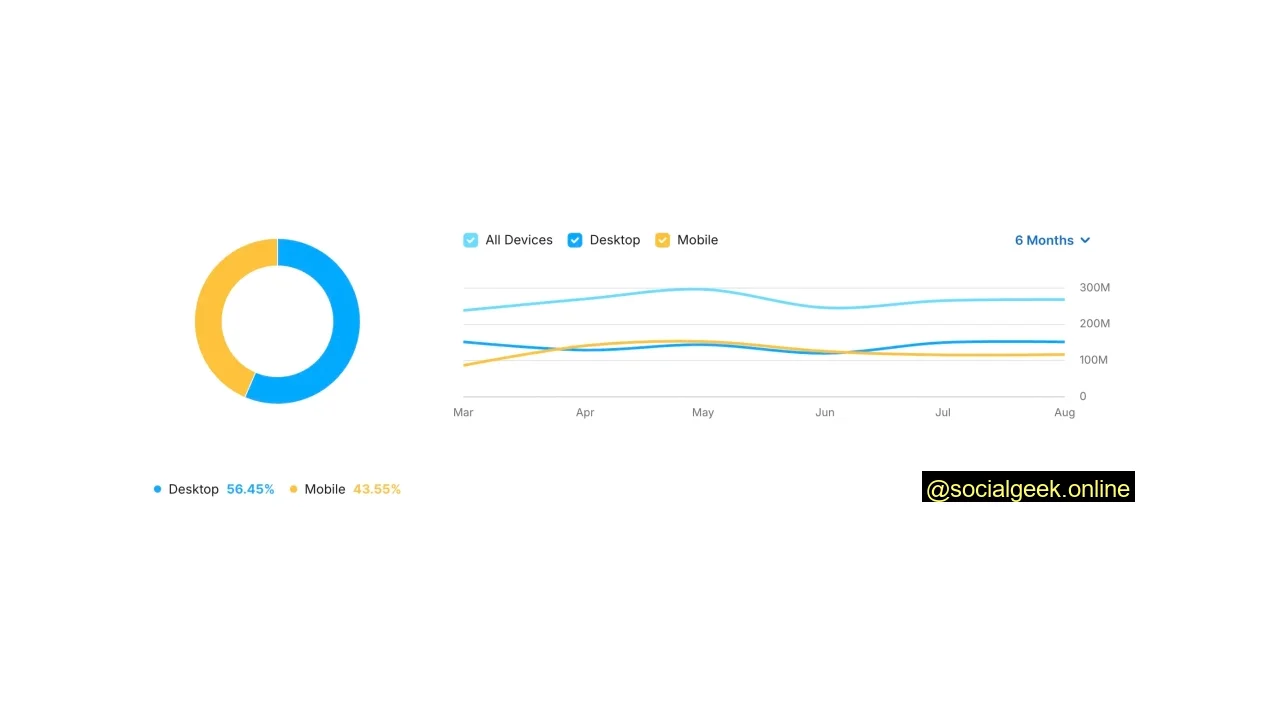
43.55% of Shopify Traffic Comes From Mobile Devices
This statistic serves as a crucial reminder for online merchants: optimizing for mobile is non-negotiable. An impressive 43.55% of traffic to Shopify stores originates from mobile devices like smartphones and tablets. Ensuring your storefront provides a seamless and user-friendly experience across all devices is vital for a smooth checkout process and has seen continued growth in recent years.
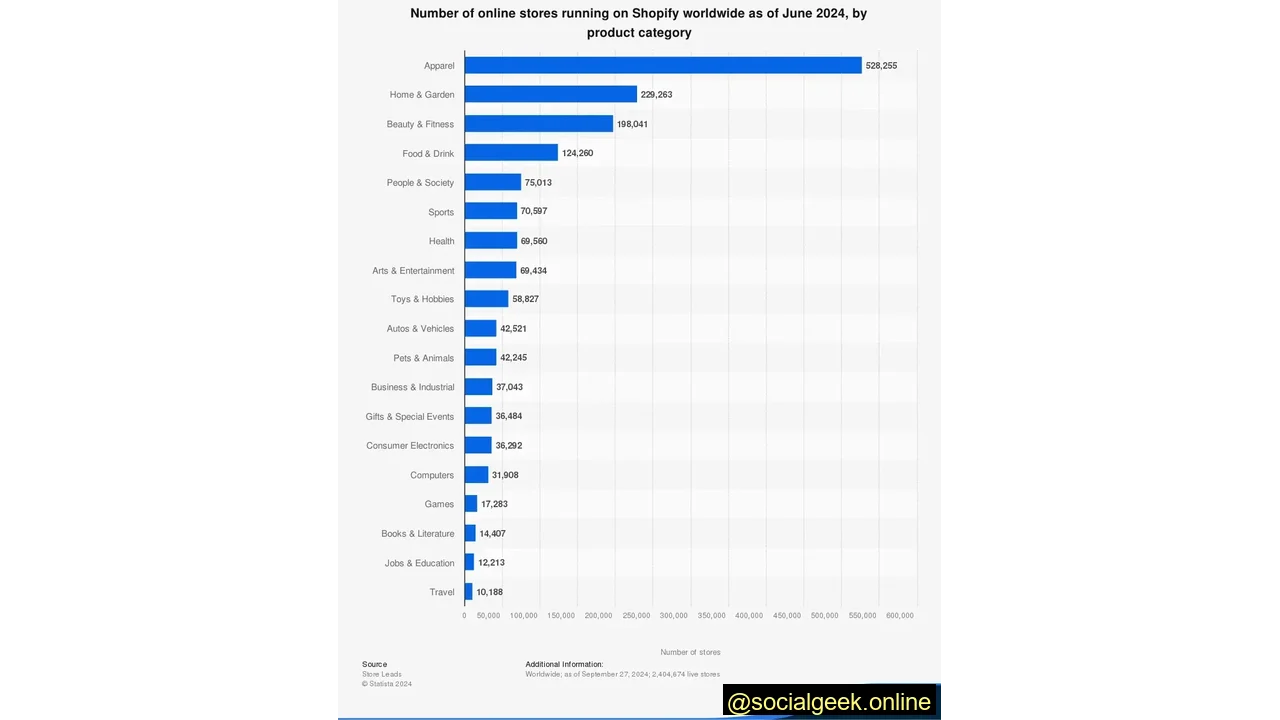
500K+ Shopify Stores Sell Apparel, Making it the Most Popular Industry
As of June 2023, the fashion industry leads as the most significant user of Shopify, with over 500,000 online apparel stores operating on its e-commerce platform. Following closely, the home and garden sector secured the second position, with approximately 220,000 stores utilizing Shopify’s services.
Global Shopify Statistics
With merchants operating in over 175 countries, Shopify’s global footprint is undeniable. It has become a leading platform for individuals and businesses seeking to build an online livelihood. Here are some compelling global Shopify statistics:
Shopify Has More Than 2.1 Million Daily Active Users
Wondering about the daily engagement on Shopify? The platform boasts approximately 2.1 million daily active users. While this number fluctuates, it signifies that a substantial number of people are actively browsing and making purchases from Shopify-powered online storefronts every single day.
Shopify is the Biggest Name in the U.S. eCommerce Software Market
When it comes to building an online storefront in the U.S., merchants have numerous choices. However, Shopify stands out as the biggest name in the U.S. eCommerce software market. As of September 2024, it powered roughly 30% of all websites with eCommerce capabilities, outpacing major competitors like Wix, Squarespace, and WooCommerce, each holding at least 15% market share.
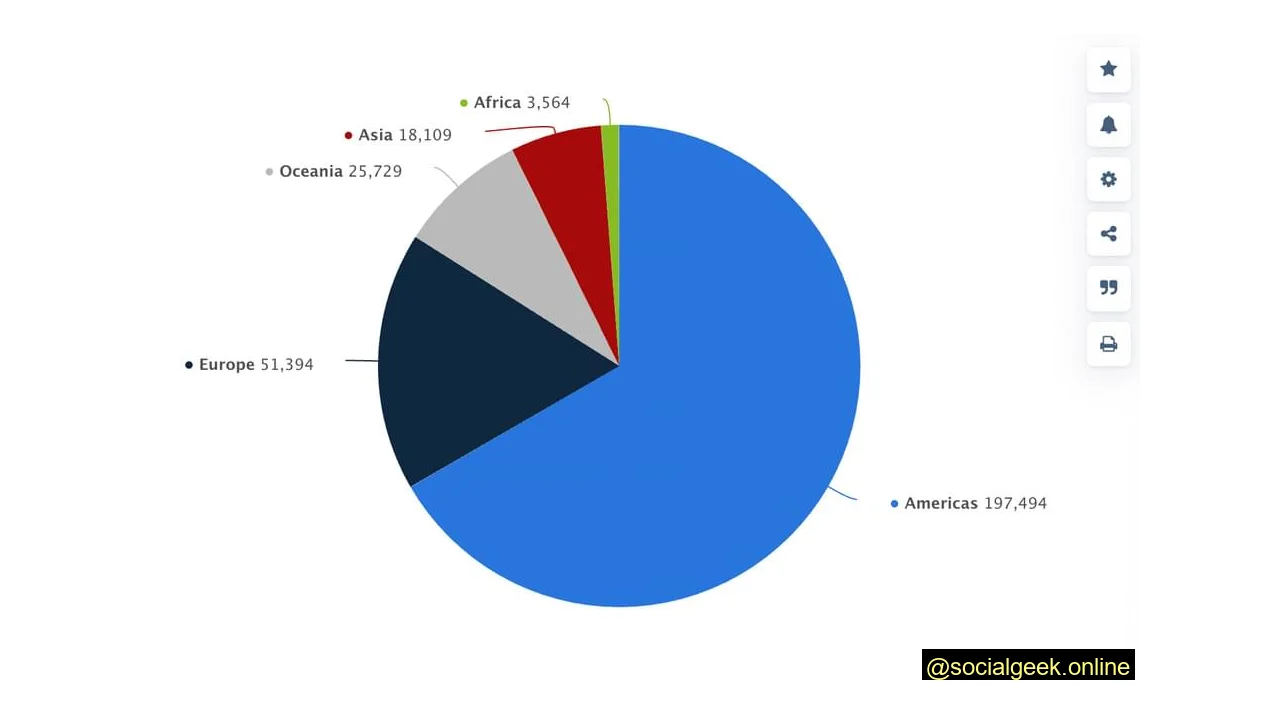
Around Two-Thirds of Shopify Stores Are Based in the Americas
The majority of online shops hosted on Shopify are created by customers located in the Americas. Approximately two-thirds of Shopify stores are based in this region. Europe accounts for about 17% of Shopify’s market, with 51,394 shops.
UK Shopify Statistics
For our audience in the UK, here are some specific Shopify statistics highlighting its presence and growth within this region. The number of active UK-based stores on Shopify continues to grow significantly, showing a 14.09% year-over-year increase as more entrepreneurs launch online businesses, solidifying Shopify’s position against competitors.
Shopify Holds 23% of the Market Share in the UK, With Wix Stores in the Lead
Unlike the U.S. market, Shopify isn’t the top player in the UK. As of September 2024, Wix Stores commanded the largest market share in the UK at 24%. Shopify followed closely behind, securing 23% of the total market.
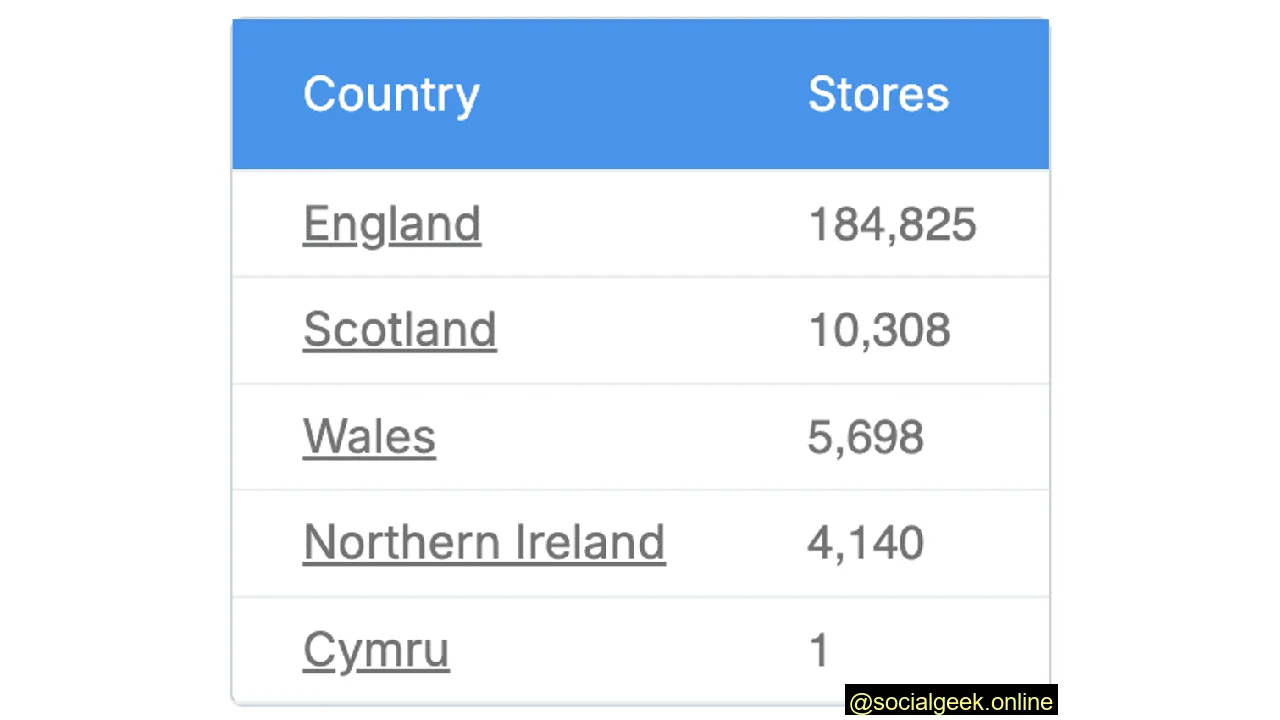
There Are About 184,825 Shopify Stores Based in England
Within the UK, the vast majority of Shopify merchants are located in England, accounting for approximately 184,825 stores. Scotland follows as the second-largest region with 10,308 stores, while Wales ranks third with 5,698 Shopify stores.
51.4% of UK-Based Shopify Stores Use Instagram
Social media serves as a powerful channel for promoting products, and UK-based Shopify store owners heavily leverage it. Instagram is the preferred platform among UK Shopify merchants, with 51.4% actively using it. Facebook comes in second at 33.4%, followed by TikTok at 14.9%, while Twitter (X) has fallen out of the top three.
Shopify Growth Statistics
Since its inception in 2006, Shopify has experienced remarkable growth in both its merchant base and customer purchases. These statistics illustrate the platform’s significant expansion in recent years:
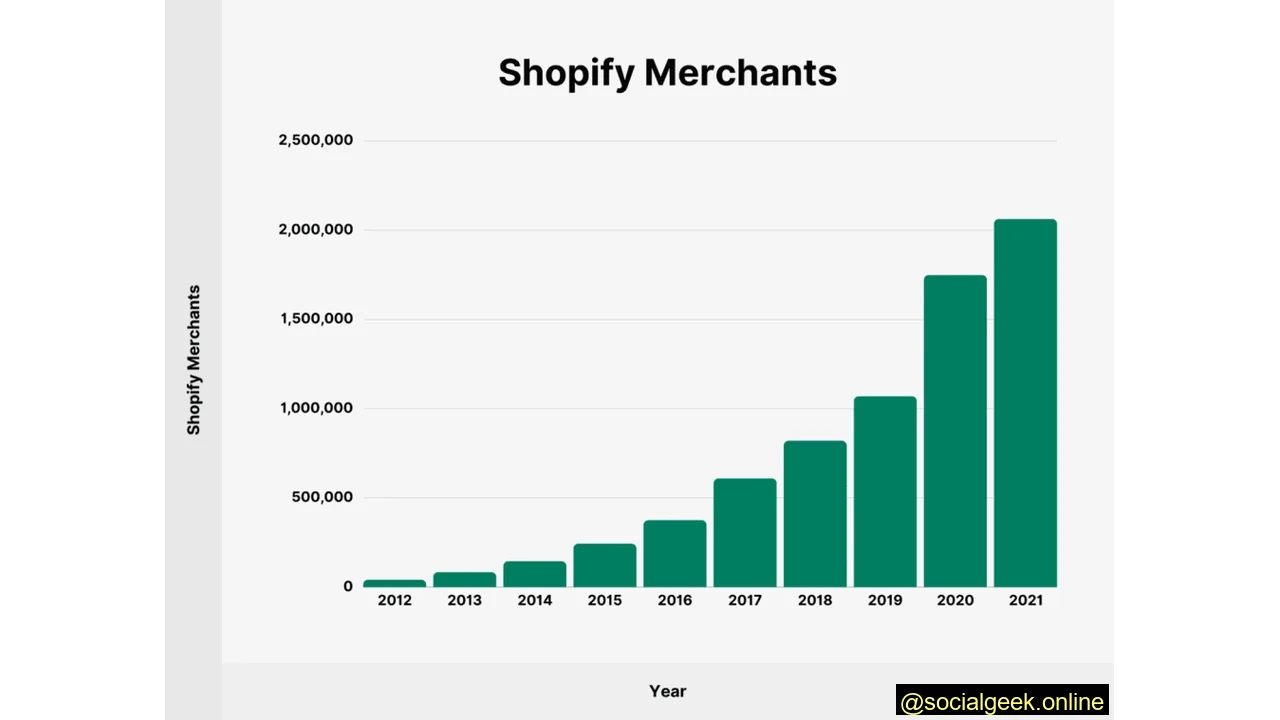
More Than 2.06 Million Merchants Sell on Shopify
Shopify statistics reveal a trend of steady merchant growth since 2012, reflecting a rising interest in online selling. Here’s a breakdown of its merchant count over the years:
- 41,000 merchants in 2012
- 375,000 merchants in 2016
- 1 million+ in 2019
- 2 million+ in 2021
675 Million People Bought from a Shopify Store
In 2023 alone, a staggering 675 million people bought from a Shopify store. This figure represents a significant increase of 47.7% since 2020, highlighting the platform’s expanding customer reach and purchasing power.
Shopify App Statistics
Shopify offers an extensive App Store, allowing merchants to customize their storefronts with various plugins. These apps enhance store design, marketing efforts, and product sourcing and selling. Here are some key statistics about the Shopify App Store:
The Shopify App Store Contains 11,900 Apps
The Shopify App Store is a vast ecosystem, currently featuring an impressive 11,900 apps. These tools offer merchants endless possibilities for extending their store’s functionality and improving their operations.
Over 4.7 Million Sellers Use Shopify
Last year, more than 4.7 million sellers chose Shopify to establish and manage their online businesses. Interestingly, given that there are roughly twice as many live websites created with Shopify, this suggests that, on average, each seller operates about two distinct Shopify websites.
Shopify for Business Statistics
Businesses considering an online storefront often look to Shopify due to its prominence in the eCommerce market. To assist in your decision-making, here are some crucial Shopify statistics:
69% of Online Sales During BFCM Took Place via Shopify Merchants
The global eCommerce market is on a steady upward trajectory, anticipated to reach an astounding $4.8 trillion in 2025. The continued growth in the coming years emphasizes the lucrative potential of borderless eCommerce for online retailers. Looking ahead to 2024, a substantial 21.2% of all retail sales are projected to occur online. Notably, in 2022, mobile shopping through Shopify merchants dominated, capturing a significant 69% of online sales during the Black Friday Cyber Monday (BFCM) extravaganza.
Shopify Has An Average Returning Customer Rate of 27%
A study conducted by RJMetrics revealed that Shopify stores maintain an average returning customer rate of around 27%. It’s important to note that this is an average, and individual stores may experience higher or lower rates depending on their unique business context. A returning customer is defined as someone who has made at least two purchases from a specific store.
$72 Was the Average Revenue Per Shopify Customer in 2022
If your Shopify store achieved $226 in revenue per customer, you would be among the top 10% of best-performing stores on the platform. However, the average revenue per customer in 2022 was $72. Stores generating less than $33 per customer would fall into the bottom 10%.
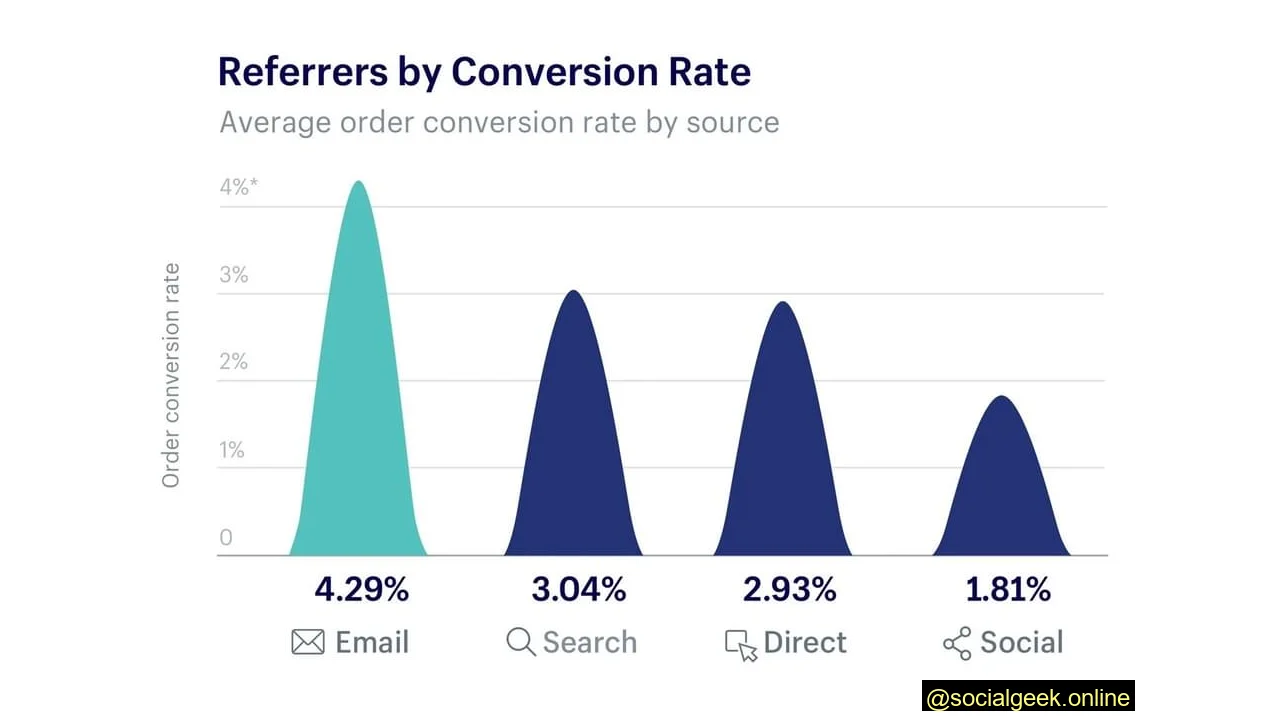
Email Marketing Has a 4.29% Conversion Rate for Shopify Stores
To significantly boost your Shopify store’s conversion rate, email marketing emerges as the clear winner. It boasts a higher conversion rate compared to other tactics, making it an incredibly powerful strategy for driving sales. These Shopify statistics clearly indicate the importance of leveraging email campaigns to engage your audience and promote products. Here’s a breakdown of conversion rates by tactic:
- Email marketing: 4.29% conversion rate
- Search: 3.04% conversion rate
- Direct: 2.93% conversion rate
- Social media: 1.81% conversion rate
Biggest Stores on Shopify
Many renowned brands utilize Shopify to power their online storefronts, ensuring you’re in excellent company should you choose the platform. Discover some of their top merchants who rely on Shopify to sell their products:
Tesla is one of the Biggest Companies Using Shopify
If it’s sufficient for Tesla, it’s likely robust enough for your brand. Famous for its electric vehicles, Tesla operates a Shopify-built online store that sells car chargers, vehicle accessories, and even apparel.
Sephora is Another Popular Shopify Merchant
Owned by LVMH, Sephora operates an online store in conjunction with its 2,600 retail locations worldwide. This allows them to effectively and effortlessly reach customers, enabling them to shop from the comfort of their homes.
Nestlé Rounds Out the Top Three Merchants on Shopify
Nestlé is a global leader in beverage and food products, offering everything from coffee makers to instant coffee. As a B2C company, they require an accessible platform for customers to purchase their offerings, and they successfully manage this using Shopify.
Leveraging These Shopify Statistics
As you plan or refine your online storefront, these Shopify statistics offer valuable insights to help you choose the right platform. Shopify stands as a strong contender with a significant global market share, and the success stories of businesses utilizing its platform underscore its effectiveness. By understanding these trends, you can make informed decisions to drive your own online business forward.