What’s the best content to create to reach your target audience? If you’re like most content marketers, your bet is on long-form blog posts. While still a popular choice, video is rapidly becoming a formidable contender in the marketing ring, captivating audiences worldwide.
Recently, YouTube experienced a 20 to 30% increase in views, indicating a surge in video consumption. Engagement is at an all-time high, with 56% of consumers watching more videos on social media each month.
Consumers aren’t just watching influencers and funny skits; they’re also engaging with brands. Data shows that four in 10 internet users follow brands they like and consider buying from, and another 35% have watched videos made by brands.
If you’re among the 70% of eCommerce brands increasing your video marketing budgets, you’re likely seeking strategies for the highest returns. We’ve explored the landscape to identify the top trends shaping video marketing for the coming years.
1. Social Media Video Advertising
Advertising your videos on social media is absolutely essential. These platforms encourage users to follow brands and discover new products, demonstrating a clear pattern of people using them for purchasing decisions.
Investing in social media video advertising makes strategic sense, especially if you’re building an organic audience. It’s estimated that one in five UK businesses had already planned to increase their spend for paid social media marketing in 2021. Vertical video is currently the trending format for social media ads, but offering both horizontal and vertical capabilities is a good idea.
Regardless of the type of social media ads you create, get creative and use both formats to tell engaging stories. For instance, use vertical video when there’s one person on screen, then switch to a wider scene that’s viewable when the user turns their device horizontally.
Combining organic and paid video content in your digital marketing strategy can yield significant results, such as reaching thousands of new customers, millions of video ad views, and substantial return on ad spend (ROAS).
2. Shoppable Videos
Planning a new product launch or aiming to drive more awareness and traffic? The internet is a primary destination for consumers seeking products, and they’re increasingly turning to social media channels for recommendations from friends and influencers.
E-commerce brands are leveraging shoppable videos to attract and convert viewers. Unlike traditional product videos, these are often disguised as regular content with clickable pop-up text linking directly to featured items.
Social media platforms like Instagram and Facebook are rapidly integrating shoppable video content, particularly within their advertising ecosystems. Brands can establish a Shop on both platforms, pulling inventory directly from their e-commerce website. This allows social media users to see an organic post with an item tagged, view more information, and purchase the item from the Shop – all without ever leaving the platform.

“After watching your video ad, people won’t have to go out and manually hunt for the goods. They can now just click on the product in the video to be redirected to the landing page right away. This will be a powerful technique for increasing sales, and you should give it a try.”
“These are video advertisements that contain connections to products within the video’s universe. Many of these can be found on Instagram Stories and Snapchat, but the approach is growing more advanced.
“It’s a safe bet that you’ll soon be able to buy things or get links to them by interacting with objects in videos. If you hover your mouse over a chair on the screen, you may be able to learn more about that model and where to buy it. The same could be said for a smartphone being reviewed in a YouTube video.” — Brian Dean, founder of Exploding Topics
It’s estimated that 40% of marketers are already using shoppable videos. For optimal results, treat them as valuable content rather than just ads. Focus on topics your audience cares about and offer genuine value. Additionally, make it clear that the video is interactive by adding shoppable links within the first 30 seconds and using hashtags like #shoppablepost. Simply stating it at the beginning of the video can also be effective. Regardless of what you’re promoting, avoid overloading the video with links, as this can detract from the viewer’s experience.
3. Short-Form Videos
In today’s fast-paced world, many people juggle work, family, and hobbies, making lengthy content consumption challenging. The key to capturing the busy consumer’s attention lies in keeping videos short.
If you can keep your videos concise, the odds of attracting more views significantly increase. This principle explains the immense success of platforms like TikTok and Instagram Reels.
SurfShark’s Eric Carrell explains: “TikTok, one of the most popular social media platforms with 800 million active users, is exclusively based on short-form videos. It allows users to generate entertaining, engaging, and exciting content that swiftly spreads throughout the globe. In addition, Instagram created Reels, demonstrating that the short video craze is sweeping the globe.”
Still not convinced about the power of short-form video? One report indicates that 68% of viewers watch videos entirely if they are less than 60 seconds, while another 25% will finish if it’s under 20 minutes. Hootsuite also demonstrated that engagement stats consistently rise every time they publish an Instagram Reel.
With such compelling results, it’s no surprise these video formats have skyrocketed. Eric Carrell adds: “Major brands are catching on to the idea of filming short-form videos. The Washington Post, for example, is very active on TikTok. So, if a daily newspaper can do it, you certainly can!
Finding a method to integrate knowledge and entertainment in a TikTok or Reels video is the key to success. Consider which details you can provide in less than 20 seconds to ensure a riveting and engaging presentation.”
Need ideas for your own short video posts? Try offering behind-the-brand content that takes people behind the scenes. Experiment with user-generated videos like testimonials and tutorials. Or, provide quick, valuable tips for people following your social media profile.
4. Live Video Streaming
Connection, intimacy, and authenticity are what people desire from brands today. Shifting away from sales talk and corporate jargon, consumers want human, relatable video content that fosters genuine connection.
Since face-to-face interactions aren’t always possible, live streaming offers the next best alternative. It’s growing globally; last year in the UK, people spent nearly 64% of their time watching videos, much of which occurs across social platforms. Facebook garners the largest share of live video views, followed by Snapchat, Instagram, and Twitter.
What’s happening on these platforms?
- Around 20% of Facebook videos are live broadcasts.
- On Twitter, users see a 14% increase in unique visitors during live events.
- Even LinkedIn is seeing significant live engagement, with 69% of its members watching the same or more live content than before the pandemic.
During the COVID-19 pandemic, Instagram witnessed an astounding 70% boost in live video usage within just one month, underscoring the human need for connection, even virtually.
Real-time video offers brands an unparalleled opportunity to connect directly with their audience and grow their presence. You can use live streaming to tell authentic brand stories, host interactive Q&A sessions, and showcase the people behind your brand.
“Make yourself approachable to your audience. Allow them to publish their questions on social media, and then respond to each one in real-time. This will increase viewer engagement and trust.”
“You may adapt to this trend by hosting live webinars, holding Q&A sessions, and holding product demonstrations, among other things. Take the benefit of these platforms and their features that allow you to go live whenever and wherever you are if you have a company account on social media.” — Herbert Riggs, CEO of UnscrambleX
As Herbert summarizes, “By 2027, live streaming is expected to be a $247 billion market. This isn’t at all surprising. Personal interaction is more important to customers than anything else.”
5. Interactive Video
People aren’t just looking to read content; they want to watch it because it’s inherently more engaging. But what if you could enhance user engagement even further? The good news: it’s entirely possible using interactive video.
You may have noticed these types of social media videos popping up in your feed lately. These videos allow you to make selections and choices as you watch, influencing the content’s direction.
Here’s an example of how Love Leggings uses the emoji slider to encourage interaction with their Instagram story:
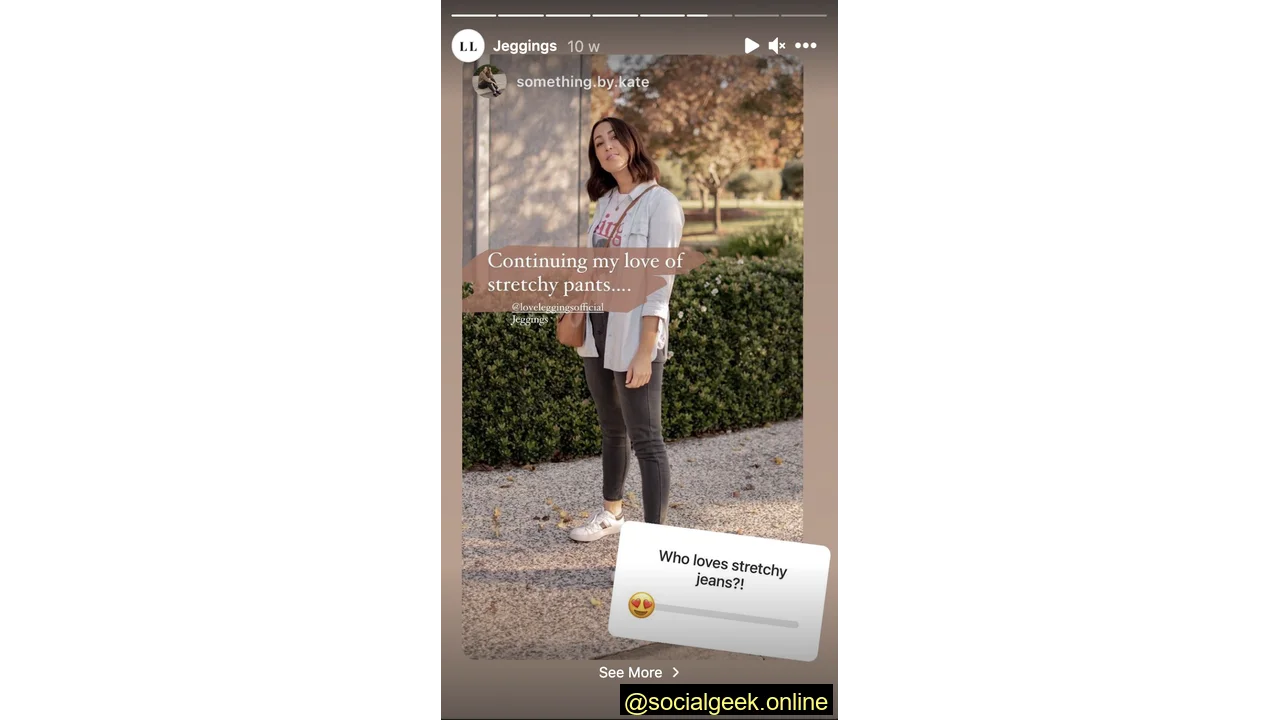
This type of video is not just interactive; it’s a branching video. A branching video presents viewers with a selection of choices that alter the outcome or progression of the content. For instance, a video could feature a chef demonstrating how to make different cookie recipes based on your selection.
There are various ways to make your video interactive, including adding an email signup form for your newsletter or integrating a chatbot to answer questions after the video concludes.
Interactive videos are already gaining momentum among businesses. Roughly 24% of video marketers planned to use them in 2021, marking a 3% increase from 2020.
Want to get in on the action? One particular type of interactive video to watch is 360-degree video. This format is perfect for experiential marketing as it fully immerses viewers into the content. Utilizing virtual reality, it allows viewers to control the camera angle by moving their device or mouse. You can use 360-degree videos to amplify brand stories, such as letting viewers “walk in your shoes,” or transform explainer videos into dynamic, interactive demos.
6. Optimize Videos for Search
Remember, the internet is the primary source of information for consumers, whether B2B or B2C. It’s critical to optimize your videos to ensure they appear prominently in search results.
However, effective video optimization extends beyond simply inserting keywords into the title and description. Evidence suggests that likes, shares, views, and comments are strongly correlated with higher YouTube rankings.
Here’s where things get interesting: optimizing a video for search goes beyond reaching page one of YouTube results. While you certainly need to choose your keywords strategically and optimize videos for your main keyword, there’s also a significant opportunity to rank your videos on the biggest search engine of all: Google. Its results page frequently displays videos for certain keyword intents. A prime example of a term Google feels necessitates a video is “How to tie shoelaces.”
The first listing is often a video, followed by a featured snippet of other videos. All of this indicates a strong chance you can rank above top blog posts in the SERPs with proper video optimization.
“YouTube’s search and discovery system have two goals: to make it easier for users to find the videos they want to watch and to increase long-term audience engagement and satisfaction.
“So, while video SEO may aid in the discovery of a new video, if it does not receive enough watch time in the first three to six weeks, it will not be discovered at a later date.” — Timothy Robinson, CEO of InVPN
7. Use TV-Connected Hosting Platforms
While more people are accessing online videos on mobile devices, this doesn’t always mean they’re consuming content on small smartphone screens.
Thanks to smart TVs, people can use their smartphones to connect videos from YouTube (and other platforms) to the big screen. In fact, 64% of UK consumers stream videos on TV more than they do on their computer, tablet, or smartphone.
What does this mean for video marketers? It highlights your audience’s preference for online video and underscores the increasing importance of incorporating it into your content marketing strategy.
Choose a video hosting platform that offers built-in stream-to-TV capabilities, like YouTube. Not only will people be able to watch your video on the big screen, but you’ll also benefit from the millions of people searching for videos on the platform every day.
Put these video marketing trends into action
Video marketing is becoming a go-to for marketers for one simple reason: it works. If you’re looking to achieve better results from your video marketing strategy over the next year, it’s time to put these video trends to use. Consider which trends align best with your marketing campaigns and how you can tailor them to resonate with your specific audience.