
In today’s dynamic digital landscape, brands constantly seek effective strategies to amplify awareness, drive engagement, and boost sales. While traditional paid advertising remains a staple, influencer marketing has emerged as a powerhouse, proving to be equally, if not more, impactful in recent years. Its ability to connect with target audiences authentically through trusted voices makes it an indispensable component of any comprehensive marketing plan.
To help you navigate this rapidly evolving field, we’ve compiled 26 crucial influencer marketing statistics. These insights will demonstrate the undeniable power of influencer collaborations and underscore why this strategy is vital for expanding your online reach and achieving your business objectives.
Top Influencer Marketing Statistics
To kick things off, here are a few fundamental influencer marketing statistics that highlight its growing importance and impact:
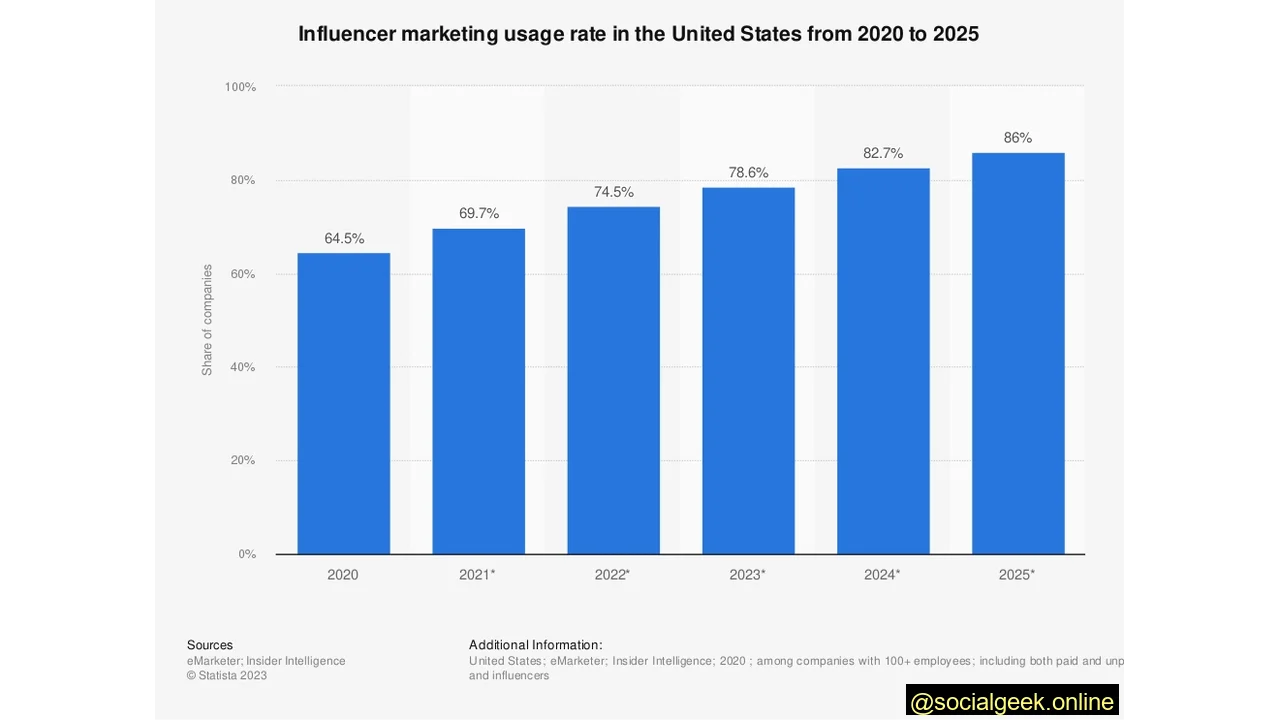
Over 78% of Marketers in the U.S. Plan to Use Influencers
The widespread adoption of influencer strategies by marketers underscores its perceived effectiveness. Approximately 86% of U.S. marketers from companies with over 100 employees were projected to engage with influencers for marketing initiatives. Globally, the influencer marketing market reached a significant valuation of 21.1 billion U.S. dollars in 2023, showcasing robust global growth.
Creating Relevant Content is the Top Objective for Marketers
Influencers thrive on authenticity, and this is highly valued by brands. A significant 44% of influencers prioritize collaborating with brands to produce content that genuinely resonates with their followers. This emphasis on relevance and truthfulness is a cornerstone of their appeal and value to their audience.
69% of Consumers Trust Influencers’ Recommendations
The power of personal recommendation from a trusted voice is immense. Research shows that 69% of consumers place their trust in product recommendations received from influencers they admire. This high level of trust translates directly into purchasing decisions and brand loyalty.
Influencer Marketing Global Statistics
Influencer marketing is a global phenomenon, with brands and creators worldwide engaging in collaborations. These statistics highlight key global trends and demographic insights:
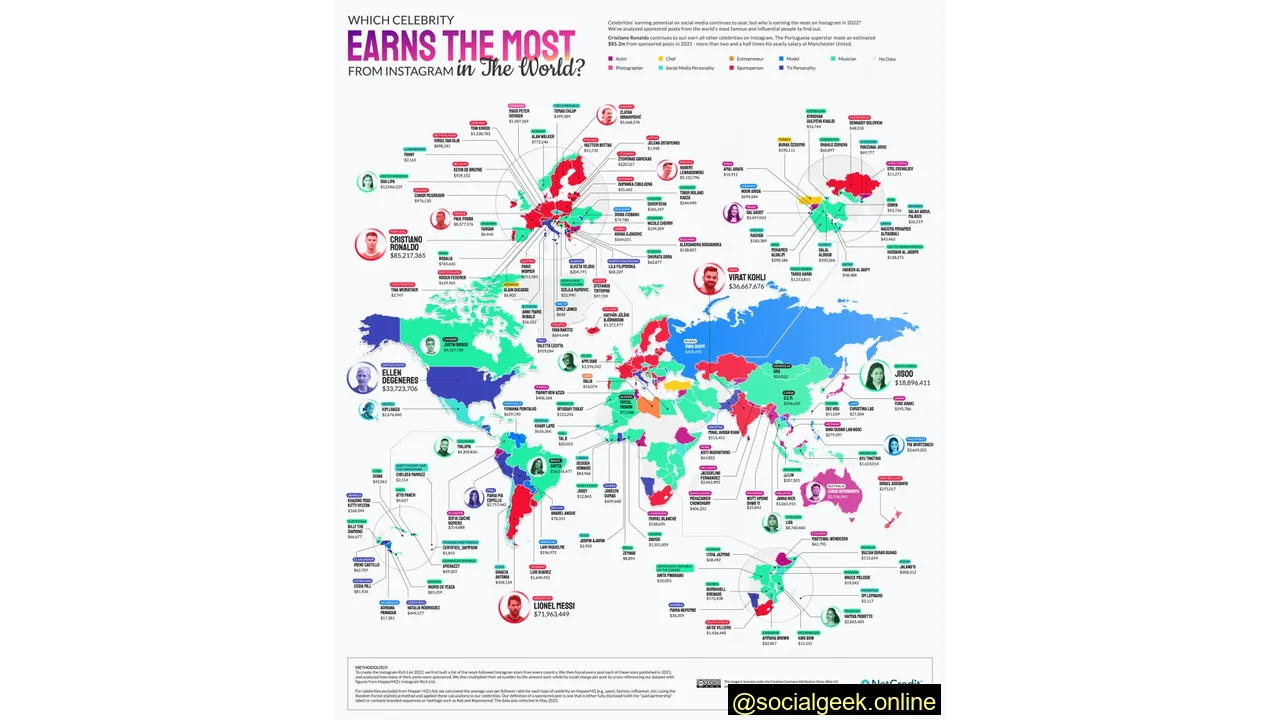
Cristiano Ronaldo Earned the Most Money on Instagram Worldwide in 2021
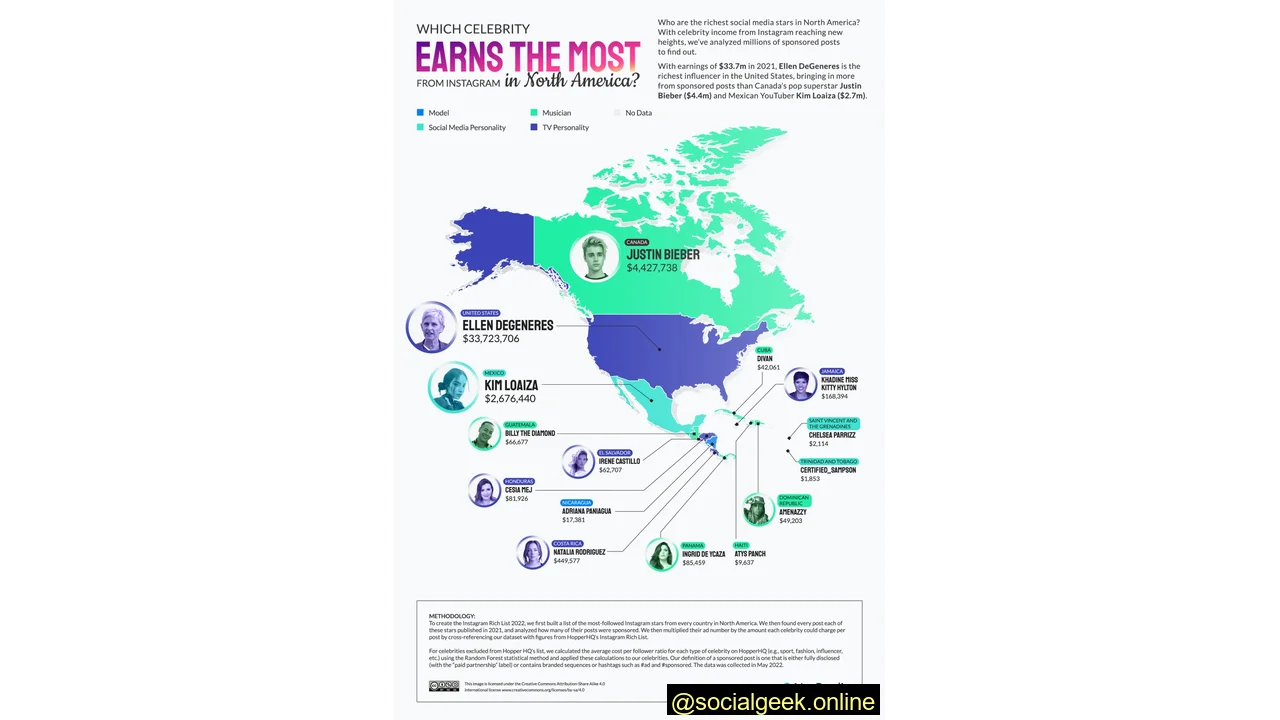
Cristiano Ronaldo topped the list for Instagram earnings globally in 2021, generating an astounding $85.22 million from sponsored posts. Fellow soccer superstar Lionel Messi followed closely, earning $71.96 million. In the United States, Ellen DeGeneres emerged as the highest earner on Instagram, bringing in $33.73 million annually, while Justin Bieber led Canadian Instagram earnings with $4.43 million.
Despite having over 100 million followers, Ellen DeGeneres’ TV show’s Instagram account commanded a rate of approximately $750,000 for a sponsored ad. Her strategy of sharing about one sponsored post per week contributed to her annual income of $33.73 million, solidifying her position as the highest-earning Instagram influencer in the U.S. and North America, and ranking fourth worldwide.
77% of Instagram Influencers Making Money Worldwide Are Women
According to the Collabstr 2023 Influencer Marketing Report, women constitute 77% of content creators who actively generate income from their content, with men making up the remaining 23%. This data specifically refers to individuals offering content creation services for payment, rather than a general comparison of male and female users.
Influencer Marketing UK Statistics
The United Kingdom is a significant player in the influencer marketing landscape, with brands actively leveraging creator partnerships. Here are some key statistics for the UK market, alongside a relevant global spending figure:
Google Searches for “Influencer Marketing” Grew by 400% in the UK from 2016-2023
This statistic clearly demonstrates a surge in interest and awareness surrounding influencer marketing. From 2016 to 2023, Google searches for “influencer marketing” in the UK alone experienced an impressive 400% increase, reflecting its growing prominence.
Influencer Marketing Spend in the U.S. is $26.09 Billion in 2023
While this particular statistic focuses on the U.S. market, it provides valuable context for the overall scale of influencer marketing investment. In 2023, the United States invested approximately 26.09 billion U.S. dollars in influencer marketing. This figure, though substantial, was nearly $8 billion less than the global spending, which surpassed $34 billion, indicating the vast international reach of the industry.
Lifestyle Content Was the Most Popular Influencer Category in 2020
Influencer marketing spans a diverse range of niches. In the UK during 2020, lifestyle content was the most sought-after influencer category. It was closely followed by travel and food content, highlighting the consumer interest in these areas.
Influencer Marketing Industry Growth Statistics
Influencer marketing, though not a new concept, has experienced exponential growth, solidifying its position as a major force in digital advertising. These statistics illustrate the remarkable expansion of the industry:
Influencer Marketing Has Grown to Become a $21.1 Billion Industry
The journey of influencer marketing from a niche strategy to a mainstream industry is evident in its financial trajectory. What began as a $1.7 billion industry in 2016, surged to a staggering $21.1 billion in 2023. This booming growth, coupled with attractive returns on investment, makes it increasingly appealing for marketers to increase their spending on influencer collaborations.
Micro-Influencers Make Up 47.3% of All Influencers
The landscape of influence extends beyond mega-celebrities. Micro-influencers, who typically have smaller but highly engaged and loyal communities, wield significant impact. Influencer marketing statistics reveal that these valuable creators account for 47.3% of all influencers, demonstrating their crucial role in authentic audience connection.
Influencer Marketing for Business Statistics
For businesses, partnering with influencers can rapidly generate traction, boost brand visibility, and drive sales. Consider these vital statistics before launching your next influencer campaign:
Businesses Make $6.50 for Every $1 Spent on Influencer Marketing, on Average
The return on investment (ROI) in influencer marketing is compelling. Data indicates that businesses, on average, generate $6.50 for every $1 invested in influencer marketing. Furthermore, a remarkable 3% of businesses achieve an even higher return, pulling in $20 or more for every dollar spent. This highlights the effectiveness of influencer marketing for the vast majority of businesses, with only a small segment (18%) failing to produce any revenue.
57.6% of Brands Working With Influencers Run eCommerce Stores
Influencer marketing is a particularly popular and effective channel for eCommerce businesses looking to expand their customer base. A significant 57.6% of brands that collaborate with influencers operate an eCommerce store, leveraging these partnerships to promote and sell their products directly to engaged audiences.
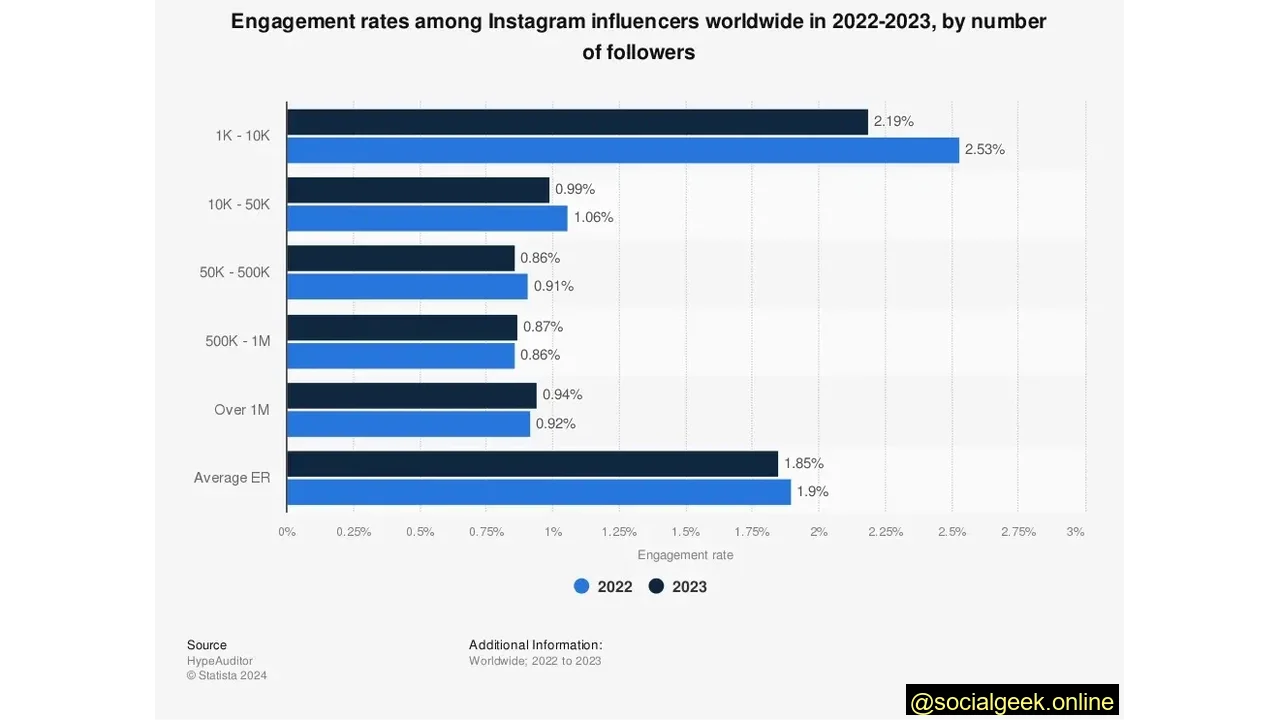
Nano-Influencers Have the Highest Engagement Rate at 2.19%
When selecting an influencer for your campaign, remember that follower count isn’t the sole determinant of success. Nano-influencers (those with 1,000-5,000 followers) consistently demonstrate the highest engagement rate at 2.19%. This surpasses even mega-influencers with millions of followers, showcasing the power of close-knit communities and authentic interactions.
Influencer Marketing ROI Statistics
Achieving a strong return on investment (ROI) is paramount for any marketing endeavor. These statistics underscore the impressive ROI potential of influencer marketing campaigns, demonstrating their effectiveness in generating tangible results:
51% Say Influencer Marketing Helps Them Acquire Better Customers
Customer acquisition is a primary goal for brands, and influencer marketing excels in this area. A significant 51% of marketers report that influencer marketing has been instrumental in helping them acquire higher-quality customers. This success is likely due to strategic partnerships that align brands with influencers whose audiences are already predisposed to their offerings.
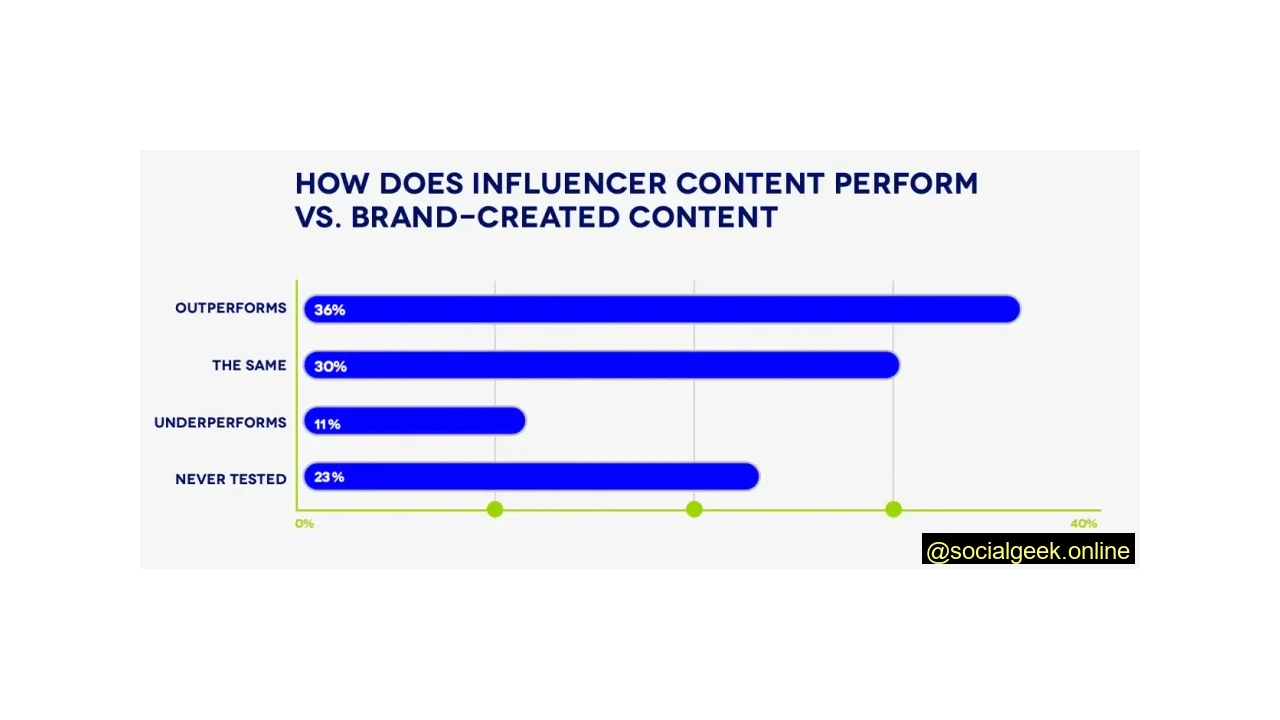
36% Believe Influencer-Generated Content Performs Better Than Branded Posts
Consumers inherently trust recommendations from real people more than direct brand messaging, which can often be perceived as biased. Consequently, 36% of marketers recognize that content created by influencers outperforms social media posts generated directly by brands. This highlights the critical role of authenticity in content marketing.
Influencer Marketing Achieved 11x the ROI Than Banner Ads
For years, paid advertising, particularly banner ads on websites and social media, has been a go-to for increasing brand awareness and sales. While these methods are effective, research suggests that influencer marketing offers a superior return. A study by Convince and Convert revealed that influencer marketing delivered an impressive 11 times the ROI compared to banner ads, making it a highly efficient channel.
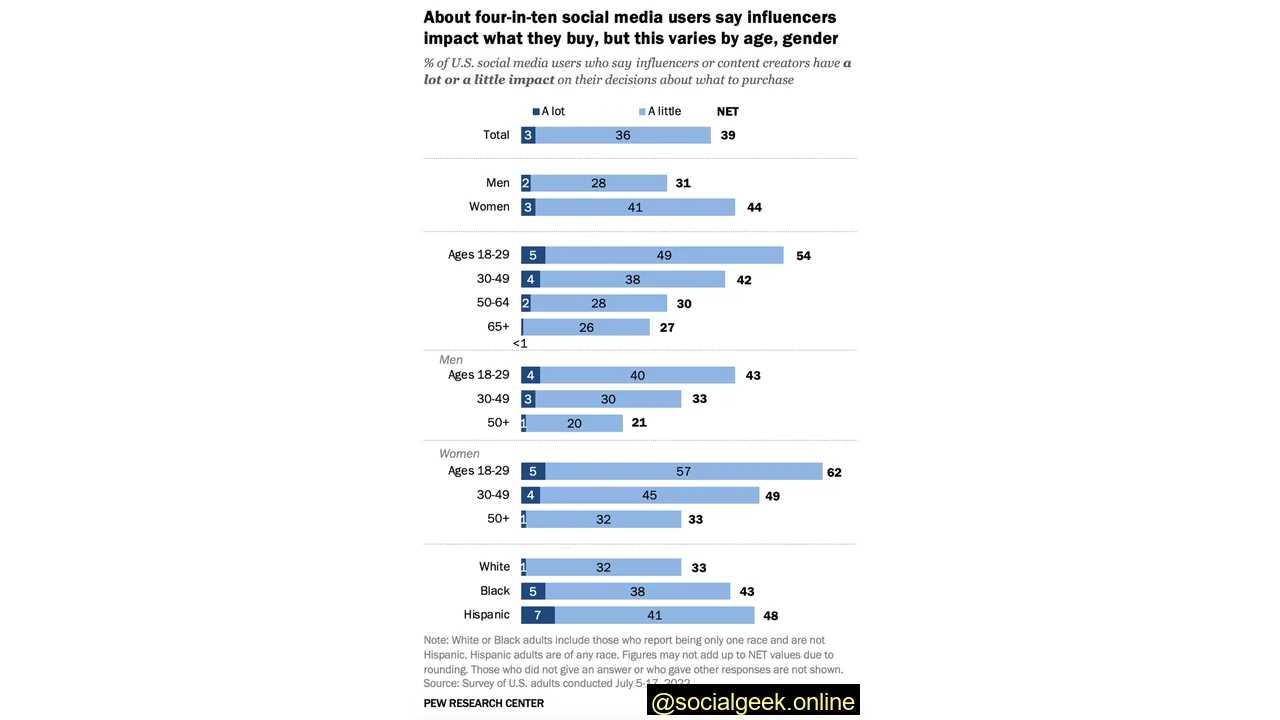
4 Out of 10 Consumers Purchased Something After Seeing it Recommended by an Influencer
The direct impact of influencers on consumer purchasing behavior is evident. Approximately four out of ten social media users (39%) acknowledge that influencers or content creators influence their buying decisions to some degree. While only 3% report a significant impact, the overall sway is undeniable.
This influence is particularly pronounced among younger demographics. Around 54% of social media users aged 18 to 29 state that influencers affect their purchases. This percentage gradually declines with age, reaching 42% for those aged 30 to 49, and dropping further to 29% for users 50 and older.
Instagram Influencer Marketing Statistics
Instagram continues to be a dominant platform for influencer marketing, offering diverse content formats and a highly engaged user base. These statistics illustrate why it remains a top choice for both brands and creators:
Instagram is One of the Most Important Platforms for Influencer Marketing
In a crowded social media landscape, choosing the right platform for campaigns is crucial. Instagram consistently ranks as one of the most vital platforms for influencer marketing. Its versatility allows influencers to share content via main feed posts, Stories, Reels, and more, providing brands with numerous avenues for collaboration.
Half a Million Influencers Prefer Instagram
The popularity of Instagram extends to creators themselves. A remarkable half a million influencers have declared Instagram as their preferred or sole channel for influence. This preference is likely driven by its robust features for content creation and audience engagement, as well as its established position in the influencer ecosystem.
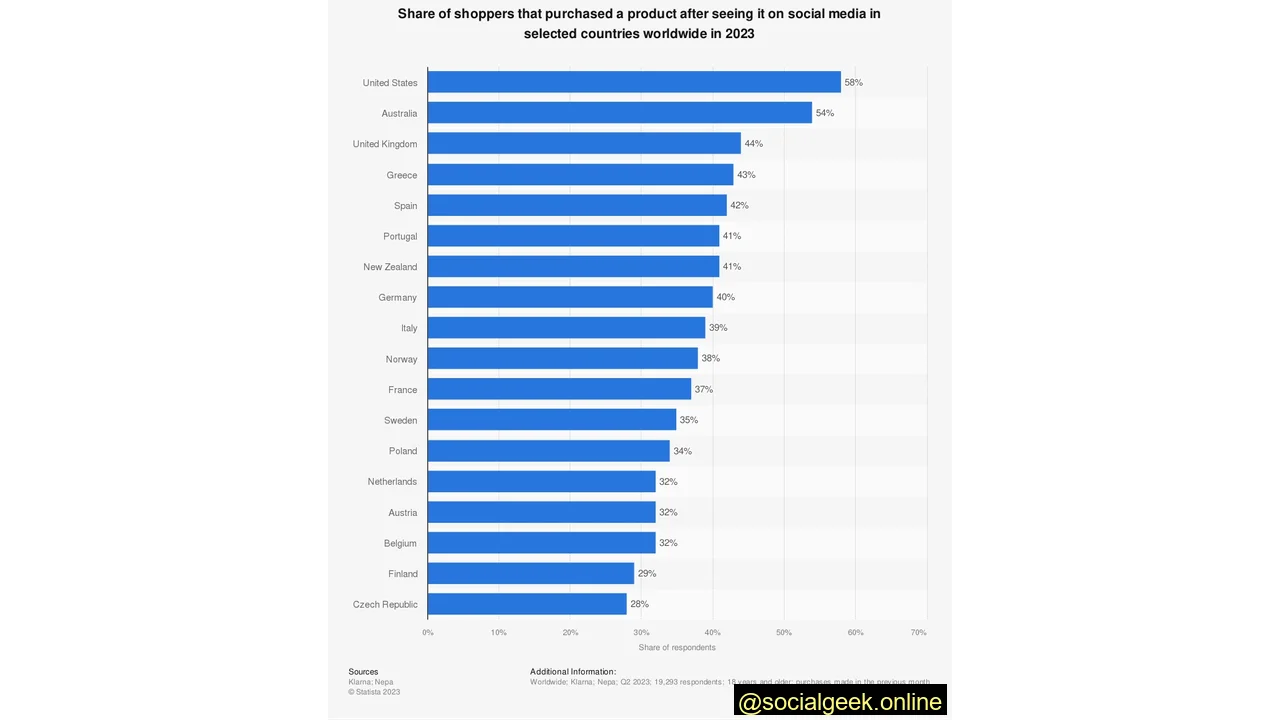
58% of Shoppers in the U.S. Took Action After Seeing a Product on Social Media
Social media platforms are powerful drivers of consumer action. A 2023 survey revealed that approximately 58% of U.S. shoppers reported purchasing a product they discovered on a social media platform. Similar trends were observed globally, with 44% of respondents in the United Kingdom and 40% in Germany making purchases after seeing products on social networks.
Fashion is the Focus of 25% of Sponsored Posts on Instagram
The fashion industry has a strong symbiotic relationship with Instagram. A quarter of all sponsored posts on the platform are dedicated to fashion, making it Instagram’s leading category for brand partnerships. This dominance surpasses other popular niches like food, entertainment, and baby products, highlighting fashion’s immense visual appeal and influencer marketing potential.
YouTube Influencer Marketing Statistics
When it comes to engaging video content, YouTube remains a cornerstone for influencers who passionately discuss and endorse their favorite brands and products. These statistics reveal why YouTube is an exceptional platform for impactful influencer-brand collaborations:
70% of Teenage YouTube Subscribers Relate to YouTube Creators More Than Traditional Celebrities
While the influence of traditional celebrities persists, younger generations increasingly value the opinions and relatability of online creators. Google reports that an impressive 70% of teenage YouTube subscribers feel a stronger connection to YouTube creators than to conventional celebrities. This authentic connection translates into significant influence over their audience.
4 in 10 Millennial Subscribers Say Their Favorite Creators Understand Them Better Than Their Friends
The profound impact of YouTube creators is further highlighted by the sentiment among Millennials. Four in ten Millennial subscribers believe their favorite YouTube creators understand them better than their own friends. This statistic underscores the deep trust and personal bond creators forge with their audiences, making them incredibly influential figures.
Beyond personal connection, YouTube videos by creators also outperform traditional celebrity content in engagement metrics. Google’s data indicates that YouTube creators achieve 3x more views, 2x more actions, and 12x more comments than videos from traditional celebrities – a clear win for authentic creator content.
6 in 10 YouTube Subscribers Would Follow Advice on What to Buy From Their Favorite Creator Over Their Favorite Celebrity
When it comes to purchasing decisions, the advice from a beloved YouTube creator holds significant weight. A striking six in ten YouTube subscribers would rather take product recommendations from their favorite creator than from a renowned TV or movie personality. This demonstrates the immense purchasing influence wielded by YouTube’s authentic content creators.
TikTok Influencer Marketing Statistics
Despite being a relatively newer platform compared to its counterparts, TikTok has rapidly cemented its position as a major player in the influencer marketing arena. Its unique, short-form video format fosters incredibly high engagement, offering fresh opportunities for brands. Here are key statistics to consider for TikTok campaigns:
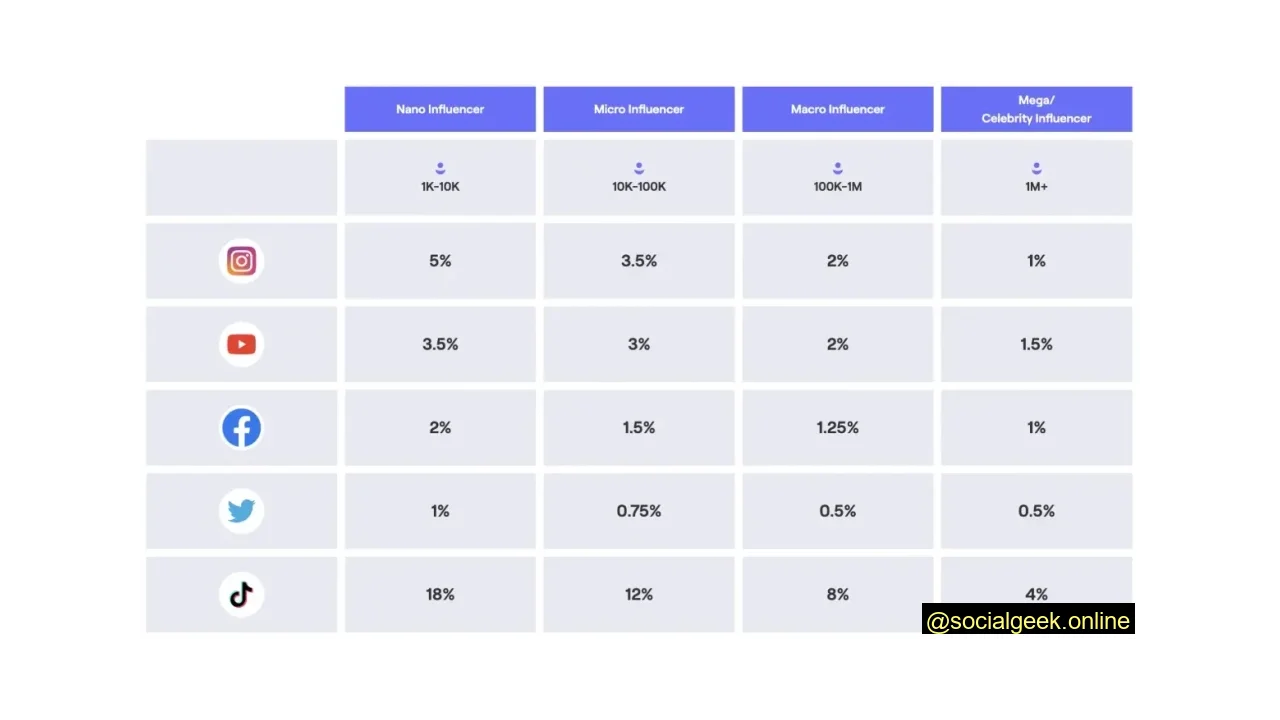
TikTok Influencers With Less Than 15k Followers Have an 18% Engagement Rate
TikTok’s explosive user base growth has unlocked vast opportunities for brands. Influencers on TikTok with fewer than 15,000 followers achieve an impressive 18% engagement rate. This significantly outperforms Instagram’s average engagement rate of 5%, highlighting TikTok’s unique capacity for deep audience interaction, especially with smaller creators.
78% of Survey Respondents Buy Products Through TikTok
TikTok’s rapid ascent as an influencer marketing platform is undeniable, with approximately 55.5% of marketers now integrating it into their influencer campaigns. This investment is well-justified: TikTok users are highly active consumers, with a substantial 78% reporting that they have purchased products showcased in content created by TikTok influencers on the platform. This demonstrates TikTok’s direct impact on conversion.
Leveraging These Influencer Marketing Statistics
The data presented throughout this article unequivocally demonstrates the power and effectiveness of influencer marketing as a core strategy in modern advertising. These insights not only validate its significant ROI but also serve as a crucial guide for determining which platforms are best suited to reach your specific target audience.
Platforms like Instagram, YouTube, and TikTok have consistently proven their strength and versatility for successful collaborations between influencers and brands. Each offers unique advantages in terms of content format, audience demographics, and engagement potential.
Remember, a successful influencer campaign doesn’t necessarily demand an astronomical budget. The true keys to success lie in crafting a campaign that resonates authentically with both the chosen influencer and their audience, and in selecting the right individuals whose values and reach align perfectly with your brand’s objectives.